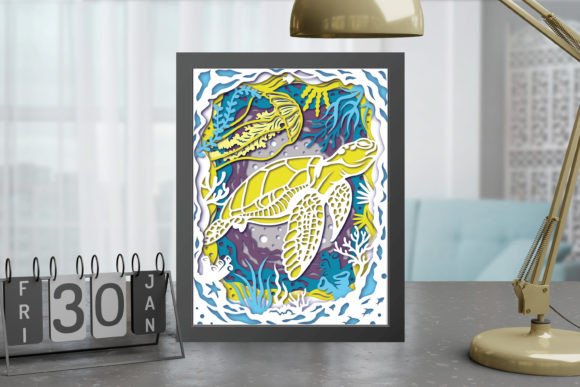
Sea Turtle Papercut SVG for Laser Cutting Wall Decor
When a client approaches me with a vision for a boutique eco-friendly home goods line, the visual language needs to be precise. They want something that feels organic yet structured, handcrafted but scalable. Recently, I was tasked with creating a flagship visual identity for a small business launching a summer collection of handmade paper art and sustainable wall decor. The brief required a central motif that could translate seamlessly from digital marketing visuals to physical production. That is when I pulled up the Sea Turtle Layered Papercut SVG to evaluate its potential as a core design asset.
First Impressions: Mood and Visual Style
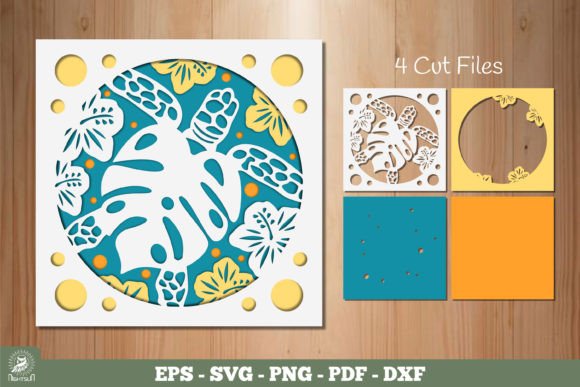
The moment I opened the file, the layered depth of the illustration became immediately apparent. Unlike flat clipart often found in generic creative marketplaces, this graphic design asset possesses a distinct architectural quality. The papercut style creates an inherent sense of dimension, relying on negative space and overlapping layers to build volume without needing heavy shading or gradients. This makes it an excellent choice for brands aiming for a modern, artisanal aesthetic.
For a project focused on ocean conservation or coastal living, the mood strikes a perfect balance between whimsical and professional. It evokes a sense of calm and natural beauty, which is crucial for emotional appeal in marketing materials. However, as a designer, my first instinct is not just to admire the art but to stress-test it. Does it hold up under scrutiny? Can it serve as the backbone of a brand identity, or is it merely a decorative accent? The intricate details of the turtle's shell and flippers suggest a high level of craftsmanship, making it suitable for premium positioning rather than budget-friendly mass-market items.
Performance in Real-World Design Scenarios
In the context of my client's project, the versatility of the Sea Turtle Layered Papercut SVG proved to be its strongest asset. We began by testing it as a hero graphic for their website and social media campaigns. The vector nature of the file allowed us to scale the image from a tiny favicon to a massive billboard mockup without any loss of fidelity. This scalability is non-negotiable for small business branding that plans to expand into print-on-demand products later.
We also explored its application in packaging design. The layered effect works exceptionally well on product labels and box inserts, where it adds a tactile feel even before the customer touches the physical item. For our client's merchandise line, we adapted the design for t-shirt graphics and tote bags. Because the lines are clean and the shapes are distinct, the design translates beautifully into sublimation printing and screen printing processes. It avoids the muddy look that often plagues complex illustrations when transferred to fabric.
Beyond physical products, the asset shined in digital formats. We used it to create Pinterest pins and Instagram posts, leveraging the PNG version with transparency to overlay the turtle over various textured backgrounds. The result was a cohesive set of social media graphics that felt curated and high-end. Even within Canva templates, the SVG format allowed for easy customization, letting us adjust colors to match seasonal palettes while maintaining the integrity of the original illustration.
Ideal Applications and Strategic Placement
Where does this specific design asset work best? In my experience, it thrives in large layout areas where the eye can appreciate the intricacies of the layering. As a focal point for printable wall art or a centerpiece in a marketing flyer, it commands attention without feeling cluttered. It is particularly effective for themed collections, such as a "Summer Ocean" campaign or a children's book editorial design, where the narrative of the sea turtle aligns perfectly with the content.
It also serves as a powerful supporting element in brand identity systems. When used subtly as a watermark or a repeating pattern on packaging, it reinforces brand recognition without overpowering the typography. For Etsy sellers and digital creators, this type of illustration is a goldmine for creating unique stickers and greeting cards. The papercut aesthetic is currently trending in the handmade business sector, giving clients a competitive edge in a crowded marketplace.
Cautions and Limitations in Design Hierarchy
However, every designer knows that no single asset fits every situation. There are contexts where the Sea Turtle Layered Papercut SVG should be used with extreme caution. Due to its detailed nature, it struggles in very small sizes. If you attempt to use it as a micro-icon or in a tight logo lockup, the fine lines may disappear or become indistinguishable, breaking the visual hierarchy. In minimalist corporate branding, the complexity of the papercut style might feel out of place, clashing with clean sans-serif fonts and stark layouts.
Additionally, designers must be mindful of background contrast. Placing this illustration against a busy, low-contrast background can make the layers blend together, reducing readability. It requires a clean canvas or a carefully chosen texture to ensure the design pops. For projects requiring absolute simplicity, such as a legal document header or a technical manual cover, this asset is likely too ornate. It is a creative design piece meant to evoke emotion, not convey dry data.
Practical Designer Notes and Technical Checks
Before finalizing any client project involving this asset, I always run through a strict checklist. First, I test the design in black and white to ensure the tonal values work without color reliance. This is critical for clients who may need grayscale versions for newspapers or cost-effective printing. Next, I preview the file at both thumbnail size and full-page spread to verify that the details remain crisp.
The file package provided includes essential formats for a professional workflow: SVG for cutting machines like Cricut and Silhouette, AI CS6 and EPS files for vector editing, High Quality PNG for web use, PDF for print-ready output, and DXF for laser cutting applications. This comprehensive bundle means I don't have to waste time converting files. I specifically inspected the SVG paths to ensure they were closed and optimized, which is vital for successful laser cutting projects where stray nodes can cause errors.
Typography pairing is another key consideration. The organic curves of the turtle complement script and handwritten fonts beautifully, enhancing the handmade vibe. However, for a more modern approach, pairing it with a bold display font or a geometric sans-serif creates an interesting tension that can elevate the overall design. Finally, confirming the commercial license is paramount. Since this is intended for a client's business, ensuring we have the right to use it for unlimited commercial purposes protects both the designer and the brand owner from future legal issues.
Final Verdict for Professional Use
After extensive testing across various mediums—from digital ads to physical mockups—the Sea Turtle Layered Papercut SVG has proven to be a robust and versatile tool in my design arsenal. It successfully bridges the gap between digital creativity and tangible craftsmanship. For designers looking to add depth, texture, and a touch of nature-inspired elegance to their portfolios, this asset delivers on its promise. Whether you are crafting a new brand identity, designing a seasonal campaign, or preparing a laser cutting project for wall decor, this illustration offers the flexibility and quality needed to achieve a polished, professional result.